Developing literacy and education pedagogy rooted in multi-lingual Education (MLE) approach for tribal children in Maharashtra.
About the Programme
For over a decade, Unnati has been developing and demonstrating approaches to foundational literacy rooted in Mother-Tongue-Based Multilingual Education (MTB-MLE). The approach recognises children’s home language, culture and lived experiences as important resources for learning, and creates classroom spaces where these are valued and given a dignified place.
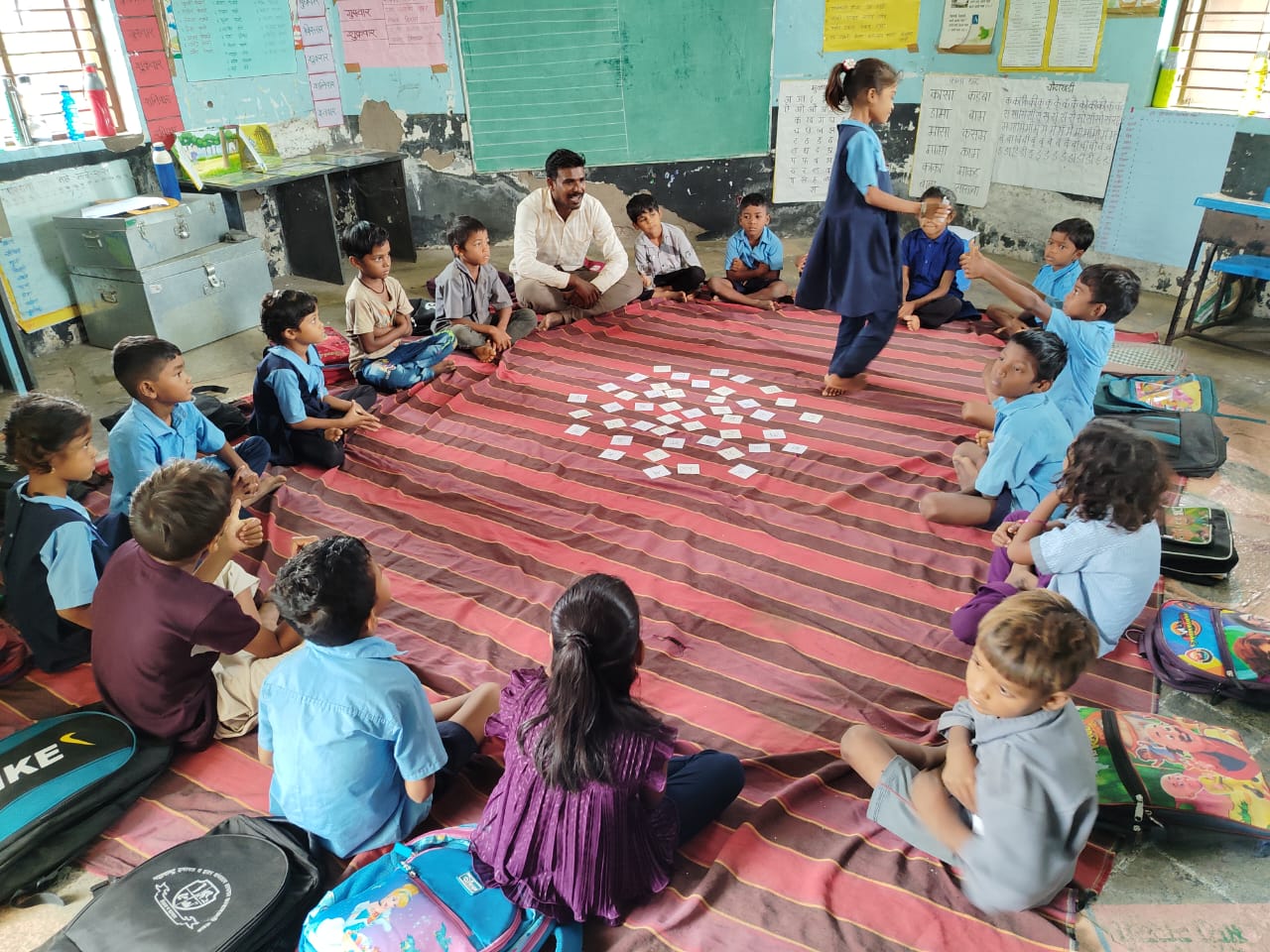
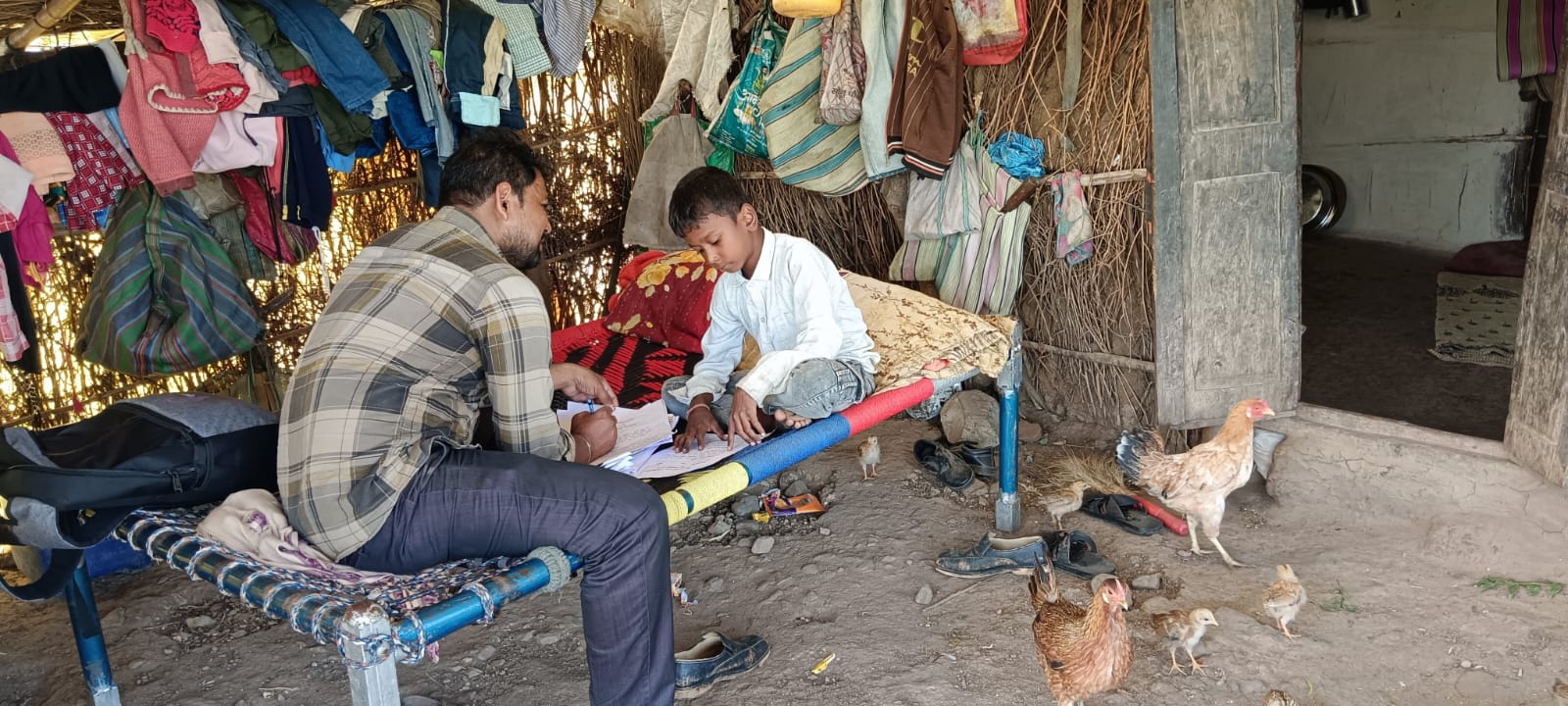
Our work currently focuses on Korku, a tribal language spoken by approximately 2.5 lakh people in Maharashtra’s Melghat region. We work with government schools, teachers and local communities to demonstrate how Korku can be meaningfully integrated with Marathi and Hindi in the early grades to support children’s language development, participation and foundational literacy.
Through classroom practice, teacher development, development of teaching-learning materials and children’s literature, we are building a practical model of multilingual education that can inform the wider education system and be adapted for other tribal languages and communities.
Aim
To strengthen foundational literacy by demonstrating and promoting MTB-MLE-based classroom practices, and contribute to the institutionalisation of multilingual education in Maharashtra’s primary schools, beginning with tribal areas.
Our Approach
We develop and demonstrate an integrated model of foundational literacy that brings together:
- Multilingual classroom practice using children’s home language alongside Marathi and Hindi
- Teacher capacity-building to help teachers understand and apply MTB-MLE principles
- Teaching-learning materials that reflect children’s language, culture and context
- Children’s literature in Korku and other familiar languages
- Language development and classroom interaction that encourage children to speak, listen, question and express themselves
- Documentation and dissemination of field experience to influence wider educational practice and policy
Key Activities
- Demonstration of MTB-MLE-based foundational literacy practices in government primary schools
- Capacity-building of government school teachers in multilingual pedagogy
- Development of Korku-based teaching-learning materials and classroom resources
- Korku language training for teachers and field practitioners
- Development and documentation of children’s literature in Korku
- Sharing field-based learning with educators, organisations and education stakeholders
Our Story of Change
When children’s language becomes a part of the classroom, children become more active participants in learning.
In our classrooms, children are encouraged to speak, ask questions, share experiences and engage in dialogue without being restricted to a single language. Korku—their home language—is used alongside Marathi and Hindi as a resource for learning. This creates a classroom environment where children can express themselves with greater confidence and connect new learning with what they already know.
This is an important shift from conventional classroom practice, where children’s home language is often absent from formal learning. Our experience shows that language is not a barrier to learning; when recognised and used meaningfully, it can become a powerful resource for learning.
Teachers, too, are beginning to see the difference. Teachers who were initially hesitant about using Korku have started incorporating children’s language into classroom interactions. In some schools, teachers have encouraged children to share stories in their own language during school activities. Such changes indicate a growing recognition among teachers that children’s mother tongue can strengthen participation, communication and learning.
What We Are Building
Our long-term goal is not simply to demonstrate multilingual classrooms, but to build a replicable and context-responsive model of MTB-MLE that can be adopted more widely in tribal education. The learning from Korku will contribute to a larger body of practice that can inform work with other tribal languages and communities across Maharashtra.
Korku Language Course
For Mother-Tongue-Based Multilingual Education (MTB-MLE) to become meaningful in the classroom, teachers need to be able to communicate with children in their home language. Recognising this need, Unnati developed “Let’s Learn Korku”, a practical Korku language course for teachers, educators and others working with Korku-speaking communities. The course focuses on developing functional communication skills that enable learners to interact with children and use Korku naturally in teaching-learning situations.
The course was first developed as an online programme during the COVID-19 lockdown and was opened to teachers, education professionals, social workers, researchers and others interested in Korku language and culture. In 2020–21, five batches were conducted in two stages, with over 362 registrations and 86 successful completions. The course subsequently attracted the interest of the Education Department of Amravati district and was conducted for teachers from tribal residential schools and Zilla Parishad schools.
The course was initially developed as an online programme and has since been offered to government school and Ashram school teachers, education professionals and others interested in the Korku language and culture. The experience has also contributed to Unnati’s wider work of developing Korku learning resources, children’s literature and a stronger ecosystem for the use and recognition of Korku in education.